
Hotline: +86 138 2658 5001
When evaluating the reliability of a CNC machining manufacturer, it is crucial to consider five key dimensions: equipment accuracy, process accumulation, delivery resilience, quality traceability, and response speed.
Equipment accuracy is the foundation: Focus on the proportion of CNC turning and milling compound machine tools and the number of machines with a spindle repeat positioning accuracy of ≤0.003mm.
Process accumulation: Check the years of continuous engagement in deep processing of precision turning and whether there are cases of one-time forming of internal holes of special-shaped tubes and internal hexagons through honing.
Delivery resilience: Evaluate the regular delivery period, the success rate of 48-hour delivery for urgent orders, and the on-time delivery rate over the past 12 months.
Quality traceability: It is necessary to have full coverage of the ISO 9001/14001/45001 systems and the ability to trace through four levels of scanning codes: furnace batch number - processing - inspection - shipment.
Response speed: Measured by the rate of closing customer complaints within 8 hours and the rate of rework.
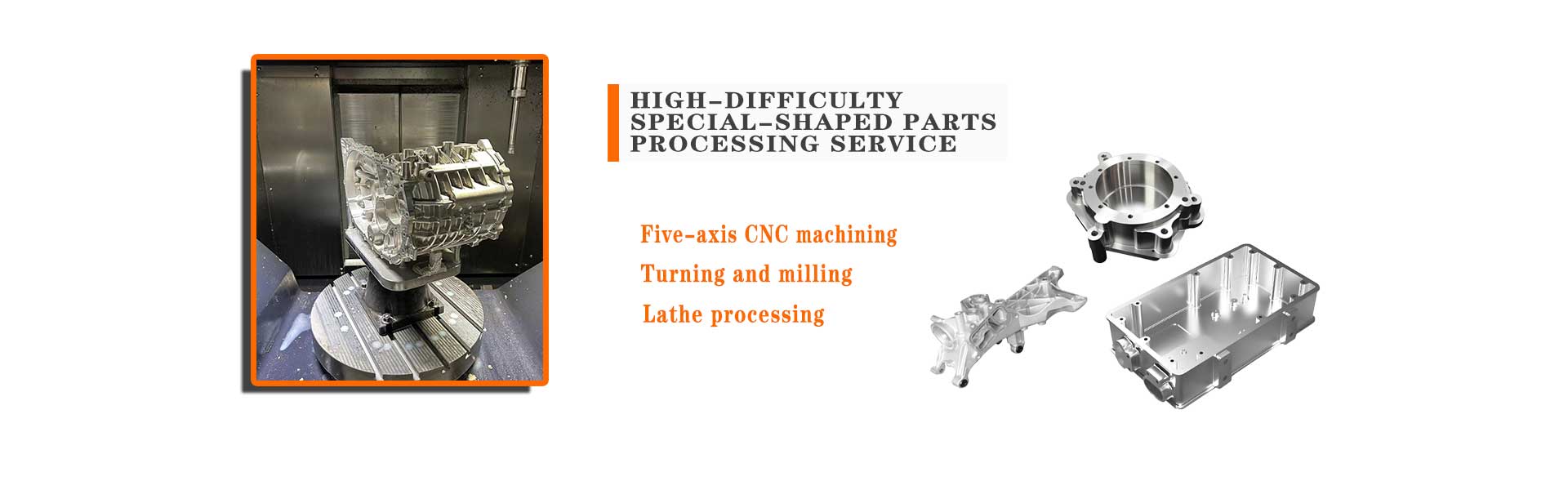
Chenju Precision focuses on precision parts processing services, offering 3-axis, 4-axis, and 5-axis CNC machining, turning and milling compound processing, CNC lathe processing, and small batch parts processing, etc. It excels in complex structural parts and can customize special fixtures and jigs for projects. Each product undergoes at least four full inspection procedures, with a quality pass rate of 99.93%. It provides high-quality small batch processing customization services for customers, with sample production within 3 days and delivery within 7 days.
Chenju Precision focuses on precision parts processing services, offering 3-axis, 4-axis, and 5-axis CNC machining, turning and milling compound processing, CNC lathe processing, and small-batch parts processing, etc. It excels in complex structural workpieces and can customize special fixtures and jigs for projects. Each product undergoes at least four full inspection procedures, with a quality pass rate of 99.93%. It provides high-quality small-batch processing customization services for customers, with sample production within 3 days and delivery within 7 days.
CNC machining typically involves four basic steps. Regardless of the machining process adopted, the following sequence must be followed:
The first step in CNC machining is to create a 2D or 3D model of the product. Designers typically use AutoCAD, SolidWorks, or other CAD (Computer-Aided Design) software to build an accurate product model. For more complex parts, 3D modeling can more clearly display product features such as tolerances, structural lines, threads, and assembly interfaces.
Step Two: Convert to CNC-compatible format
CNC machines cannot directly recognize CAD files. Therefore, CAM (Computer Aided Manufacturing) software, such as Fusion 360 and Mastercam, is needed to convert CAD models into CNC-compatible numerical control codes (such as G codes). These codes are used to guide the machine to perform precise cutting paths, feed rates, tool movement trajectories, and other parameters to ensure the accuracy of the processing.
Step 3: Select the appropriate machine tool and set the processing parameters.
According to the material, shape and processing requirements of the parts, select the appropriate CNC machine tools (such as CNC milling machines, lathes, grinders, etc.). Then, the operator needs to carry out the following preparations:Ensure the workpiece is securely fixed to prevent any displacement during processing.
Once all the preparatory work is completed, the CNC machine tool can carry out the processing task according to the preset numerical control program. The processing process is fully automated, and the cutting tool cuts the material along the set trajectory until the part is formed.
Chenju Precision specializes in precision parts processing services, offering 3-axis, 4-axis, and 5-axis CNC machining, turning and milling compound processing, CNC lathe processing, and small batch parts processing, etc. It excels in complex structural parts and can customize special fixtures and jigs for projects. Each product undergoes at least four full inspection procedures, with a quality pass rate of 99.93%. It provides high-quality small batch processing customization services for customers, with sample production within 3 days and delivery within 7 days.
In the CNC machining process of aluminum alloy parts, the metal cutting fluid for aluminum alloy processing plays a crucial role. The rational application of lubricating fluid can improve the processing conditions, thereby significantly enhancing the quality and efficiency of CNC machining of aluminum alloy parts.
In the CNC machining of aluminum alloy parts, the heat generated due to deformation and friction can rapidly spread to the workpiece, making it difficult to precisely control the workpiece dimensions and requiring greater cutting force. The proper selection of metal cutting fluid not only reduces cutting temperature, reduces tool wear, and extends tool life, but also reduces the surface roughness of the workpiece and cutting power consumption. The application effect of cutting fluid depends not only on the various functions of the cutting fluid itself, but also on factors such as the material of the workpiece, the processing method, and the material of the tool.
The application of cutting fluid in the processing of aluminum alloy parts can promptly remove the heat generated during cutting. The high-flow flushing effect of the cutting fluid enables the chips to be promptly separated from the machined surface, and it also cleans the fixtures and machine guards, thus ensuring excellent processing quality of the workpieces.
Cutting fluids can be generally classified into two major series: non-water-soluble (oil-based) and water-soluble (water-based) cutting fluids. Oil-based cutting fluids (also known as cutting oils), which are based on mineral oil, are used in demanding machining situations. Those with low viscosity are used for flushing and cooling purposes, such as in deep hole drilling, while those with high viscosity are applied in intermittent cutting, such as gear cutting and heavy turning.
In the process of aluminum alloy cutting, the selection of three process parameters, namely the concentration, pressure and flow rate of the emulsion, has a significant impact on the processing quality of the components.
If the concentration of cutting fluid is too low, problems such as rust, increased tool wear, decreased processing quality, reduced antibacterial function, and easy spoilage and odor may occur. On the contrary, if the concentration of cutting fluid is too high, it will not only increase processing costs, but also lead to decreased cleaning and cooling performance of the cutting fluid, reduced defoaming performance, impact on the eyes and respiratory tract of operators, and skin allergies and other series of problems.
Most CNC machines are equipped with a general chip flushing cooling system. When higher processing requirements are needed, a central cooling system can be selected. For general chip flushing, the cutting fluid can be chosen with small pressure and large flow parameters to promptly remove the cutting heat and the chips adhering to the workpiece, guard plate and fixture. The pressure parameter for general chip flushing cooling is generally 0.04 - 0.06 MPa.
Regarding the issue of cutting fluid flow rate, it is not the case that the higher the flow rate, the better. Instead, it should be as low as possible while meeting the working conditions to achieve a reduction in total cost. To facilitate heat dissipation and supply sufficient cutting fluid, the capacity of the water tank should be 3 to 5 times the flow rate of the system's cooling pump.
Chenju Precision focuses on precision parts processing services, offering 3-axis, 4-axis, and 5-axis CNC machining, turning and milling compound processing, CNC lathe processing, and small-batch parts processing, etc. It excels in complex structural parts and can customize special fixtures and jigs for projects. Each product undergoes at least four full inspection procedures, with a quality pass rate of 99.93%. It provides high-quality small-batch processing customization services for customers, with sample production within 3 days and delivery within 7 days.
Which precision parts processing manufacturer is the best?
With the rapid development of industry, precision parts processing is becoming increasingly popular in markets such as robotics, medical equipment, automobiles, and aviation machinery. However, finding a suitable precision parts processing manufacturer is not such an easy task. This is related to the supplier's qualifications, strength, reputation, and service. If you haven't found a suitable one yet, you might as well refer to the choices of the Fortune 500 companies.
Chenju Precision has long provided precision parts processing services for robot components. Recently, they ordered 500 sets of robot joint parts. This product is no stranger to Chenju Precision as it has undergone multiple sample making and trial production at Chenju Precision before. This product has always been highly valued. Although its appearance seems simple, the actual processing is not that easy. The precision and special surface treatment requirements are very strict. It is precisely because of these factors that this product has won a large market share today.
As the saying goes, "There is a horse of a thousand miles a day, but it is only recognized by a discerning eye." However, without the horse of a thousand miles a day, how could there be a discerning eye? On the contrary, it is the horse of a thousand miles a day that makes the discerning eye. The same principle applies to your newly designed product. Only a good precision parts manufacturer can bring out its value. Just as Chenju Precision helps customers' new products quickly capture the market, you also need such a supplier.
Since its establishment, Chenju Precision has been constantly exploring and breaking through in the field of precision parts processing. With 18 years of experience in precision parts processing, it offers a full range of services from drawing review to processing, surface treatment, and trial assembly, with an accuracy of up to +/- 0.01mm. Samples are delivered within 3 days!
Chenju Precision focuses on precision parts processing services, offering 3-axis, 4-axis, and 5-axis CNC machining, turning and milling compound processing, CNC lathe processing, and small batch parts processing, etc. It excels in complex structural parts and can customize special fixtures and jigs for projects. Each product undergoes at least four full inspection procedures, with a quality pass rate of 99.93%. It provides high-quality small batch processing customization services for customers, with sample production within 3 days and delivery within 7 days.
Often, I hear some engineer and designer friends complaining that it's too difficult to find a suitable precision parts processing factory! Either the tolerance is not up to standard, or some materials cannot be processed, or surface treatment is not provided. They have tried one factory after another but still haven't found a comprehensive and cooperative precision parts processing factory. As a precision parts processing factory with 18 years of experience, Chenju Precision offers you some tips:
First, when choosing a precision parts processing factory, pay attention to their processing equipment. The more imported the equipment is, the higher the precision will be. Some domestic and relatively cheaper CNC equipment cannot process hard materials like stainless steel, and can only handle some plastics and relatively soft aluminum alloy materials.
Second, look at the inspection equipment of the precision parts processing manufacturer. High-quality manufacturers usually have three-dimensional measuring machines, height gauges, micrometers, pin gauges, plug gauges and other precision inspection equipment. It is best to have ISO9001 quality certification. Only with good inspection tools and systems can precise products be processed.
Thirdly, sales personnel must have rich experience in precision parts processing and knowledge of surface treatment processes. Only in this way can they communicate effectively and quickly with customers without having to relay information through engineers again and again. They should also have a pioneering spirit towards some unexplored surface treatment technologies, so as to help customers solve problems effectively.
Chenju Precision focuses on precision parts processing services, offering 3-axis, 4-axis, and 5-axis CNC machining, turning and milling compound processing, CNC lathe processing, and small-batch parts processing, etc. It excels in complex structural parts and can customize special fixtures and jigs for projects. Each product undergoes at least four full inspection procedures, with a quality pass rate of 99.93%. It provides high-quality small-batch processing customization services for customers, with sample production within 3 days and delivery within 7 days.
What are the differences between CNC machining and traditional lathe machining?
In terms of processing techniques, traditional machining can handle positioning, clamping, tools, and cutting simply. However, CNC machining is more complex but can process multiple parts simultaneously with high precision.
2. In terms of clamping; in traditional machining, the processing capacity of the machine tool itself is limited, and multiple clamping operations are required. However, in most cases of CNC machining, special fixtures are not needed, which results in lower costs.
CNC machining evolved from traditional manual machining and is a new type of numerical control machine tool processing based on ordinary machine tools and computer numerical control technology as well as computer-aided 3D design and development.
Due to the continuous development of technology, there is an increasing demand for precision parts in modern industrial products. The complexity and precision requirements of parts are getting higher and higher. Therefore, automated CNC machining has become the trend of industry development. The following text will introduce the differences between CNC machining and traditional manual machining.
In terms of processing technology, in traditional manual machining, aspects such as positioning, clamping, tool selection, and cutting can all be handled simply. However, CNC machining is more complex. These factors need to be considered in the numerical control program. Even for the same processing task, CNC machining has multiple solutions. It can process multiple machining parts simultaneously, and the processing accuracy can reach as high as ±0.01mm, which is unattainable by ordinary machining.
In terms of clamping technology, in conventional machining, due to the limited processing capacity of the machine tool itself, multiple clamping operations are required during processing. Moreover, special fixtures are needed, which leads to higher fixture costs and increases production costs indirectly. However, in CNC machining, positioning and clamping are adjusted with instruments, and in most cases, special fixtures are not necessary, thus resulting in lower costs.
Chenju Precision focuses on precision parts processing services, offering 3-axis, 4-axis, and 5-axis CNC machining, turning and milling compound processing, CNC lathe processing, and small batch parts processing, etc. It excels in complex structural parts and can customize special fixtures and jigs for projects. Each product undergoes at least four full inspection procedures, with a quality pass rate of 99.93%. It provides high-quality small batch processing customization services for customers, with sample production within 3 days and delivery within 7 days.
What are the differences between three-axis CNC machining and five-axis CNC machining?
In modern manufacturing, the development of numerical control (NC) machining technology has continuously enhanced the production efficiency and precision of components. Among them, three-axis CNC machining and five-axis CNC machining are two commonly used methods at present. They have certain differences in process characteristics, application fields, and equipment investment, gradually becoming the focus of attention in the industry.
Three-axis machining is a relatively traditional CNC processing mode. As the name suggests, the tool mainly moves along the X, Y, and Z directions during the processing. This method is suitable for the processing of structures such as planes, grooves, and holes. The operation is relatively mature, and the equipment cost is relatively low, so it still has a large market demand in general parts manufacturing. However, when three-axis CNC machining is faced with complex structures and many curved surfaces, it often needs to complete the processing by multiple clamping or adjusting the workpiece posture, thereby increasing the production cycle to a certain extent.
In comparison, five-axis machining demonstrates more advantages in terms of process flexibility. Five-axis equipment not only has linear movements in the X, Y, and Z directions but also adds two rotational axes, allowing the cutting tool to approach the workpiece from more angles. This feature makes it more efficient in processing complex curved surface parts, and it has been widely applied in fields such as aerospace, medical devices, and precision molds. By reducing the need for multiple workpiece setups, five-axis CNC machining can to some extent lower the accumulation of errors and help improve the surface quality of products.
In terms of cost input, three-axis processing equipment has a relatively moderate price, and its maintenance and operation requirements are relatively simple, which is suitable for the daily production needs of most enterprises. Five-axis CNC processing equipment usually requires more funds and professional technical personnel support in procurement and maintenance, but its comprehensive value demonstrated in efficiency and precision makes more and more manufacturing enterprises regard it as an important investment direction to enhance their competitiveness.
Overall, three-axis and five-axis machining each have their own characteristics. In the future development of the manufacturing industry, they are likely to continue to be applied in parallel. How to flexibly apply different processes according to industry changes will become an important issue for enterprises to achieve sustainable development.
Chenju Precision focuses on precision parts processing services, offering 3-axis, 4-axis, and 5-axis CNC machining, turning and milling compound processing, CNC lathe processing, and small batch parts processing, etc. It excels in complex structural parts and can customize special fixtures and jigs for projects. Each product undergoes at least four full inspection procedures, with a quality pass rate of 99.93%. It provides high-quality small batch processing customization services for customers, with sample production within 3 days and delivery within 7 days.
What are the precautions for CNC machining of magnesium alloys?
I. Overview of CNC Machining of Magnesium Alloys
Machining of magnesium alloys with Computer Numerical Control (CNC) refers to the precise cutting, milling, drilling and other processing techniques carried out on magnesium alloy materials using CNC machine tools to produce components with specific shapes, sizes and surface qualities. Magnesium alloys, with their light weight, high strength and excellent machinability, are widely used in aerospace, automotive, electronic products and other fields. Through CNC machining, the precision and performance of magnesium alloy parts can be further enhanced to meet the high standards of modern industry.
II. Precautions for CNC Machining of Magnesium Alloy
Safety protection
Due to the flammability of magnesium alloys, the chips and dust produced during processing are highly prone to causing fires. Therefore, the processing workshop must be equipped with effective fire extinguishing equipment and safety protection measures. Operators also need to wear protective clothing and glasses that comply with regulations to ensure personal safety.
2. Selection of Process Parameters
Reasonable process parameters are crucial for ensuring the quality of CNC machining of magnesium alloys. These include cutting speed, feed rate, and cutting depth, all of which need to be finely adjusted based on the specific material properties, tool type, and machine performance. Excessively high cutting speed or feed rate may lead to accelerated tool wear, and even cause workpiece deformation or burning.
Selecting the appropriate cutting tools for magnesium alloy processing is the key to improving processing efficiency and product quality. Tools with high hardness, good wear resistance and anti-bonding properties should be given priority. At the same time, the wear of the cutting tools should be regularly inspected, and they should be replaced or reground in a timely manner to maintain their sharpness.
During the CNC machining of magnesium alloys, effective cooling and lubrication not only can lower the temperature of the cutting tool, reduce wear, but also enhance the efficiency of chip removal and prevent chip clogging. Generally, special cutting fluids are used for cooling and lubrication, and the selection of cutting fluids should be based on the processing conditions and material properties.
After the CNC processing of magnesium alloy is completed, further surface treatment of the workpiece may be required to enhance its corrosion resistance and aesthetic appeal. Common surface treatment methods include anodizing, electroplating, and chemical conversion coatings, etc. When choosing an appropriate surface treatment process, factors such as the product's usage environment, aesthetic requirements, and cost should be comprehensively considered.
Chenju Precision specializes in precision parts processing services, offering 3-axis, 4-axis, and 5-axis CNC machining, turning and milling compound processing, CNC lathe processing, and small-batch parts processing, etc. It excels in complex structural parts and can customize special fixtures and jigs for projects. Each product undergoes at least four full inspection procedures, with a quality pass rate of 99.93%. It provides high-quality small-batch processing customization services for customers, with sample production within 3 days and delivery within 7 days.
Five-axis machining (5 Axis Machining) is a numerical control machine tool technology that achieves complex surface processing through the linkage of three linear axes X, Y, and Z and two rotational axes. This process involves moving the cutting tool or different parts simultaneously on five different axes using CNC. This provides space for the production of very complex parts, which is why 5-axis CNC machining is very common in aerospace affairs.
One of the key factors that significantly affect the operation of 5-axis CNC machines is the need to enhance proficiency and reduce the production time from the start to the completion of the practical process.
The function of avoiding collision by fixing the part on the equipment through the rotary worktable or cutting tool provides space for the geometric shape of the part to approach quickly, which is another factor. Finally, by rotating the worktable or cutting equipment to maintain the best cutting position and uniform chip load, the service life of the equipment can be extended or prolonged.
Chenju Precision focuses on precision parts processing services, offering 3-axis, 4-axis, and 5-axis CNC machining, turning and milling compound processing, CNC lathe processing, and small-batch parts processing, etc. It excels in complex-structured workpieces and can customize special fixtures and jigs for projects. Each product undergoes at least four full inspection procedures, with a quality pass rate of 99.93%. It provides high-quality small-batch processing customization services for customers, with sample production within 3 days and delivery within 7 days.
In ChenJu Precision, our technical sales staff will response to your custom CNC machining parts within 30 minutes with 1-to-1 online service. you will get the professional advice and save you R&D time.
get an instant quote