
Hotline: +86 138 2658 5001
How to Improve the Quality of CNC Machining for Holes
In the modern manufacturing field, hole processing, as an important part of CNC machining, is widely applied in various areas such as mechanical parts, molds, and aviation components. Due to its direct impact on the product structure and assembly performance, it is necessary to control and optimize it from multiple dimensions during the actual processing to better meet the design requirements and enhance the overall performance of the parts.
I. Material Properties Affect the Effect of Hole Machining
The physical properties of different materials directly affect the processing methods and results of holes. For instance, stainless steel has a high hardness and poor thermal conductivity, which can lead to rapid tool wear and large hole diameter deviations during processing. Aluminum alloy, on the other hand, is soft and prone to tool adhesion, requiring the use of special geometry tools to improve surface quality. Therefore, before hole processing, it is necessary to fully understand the cutting characteristics of the material and rationally select the type of tool and processing parameters based on the material.
Two, Equipment stability determines dimensional consistency.
The geometric accuracy of CNC machine tools and the stability of the servo system are important foundations for ensuring the consistency of hole size. If there are minor deviations in the machine tool, especially in batch production, it is very easy to cause the accumulation of hole diameter errors. It is recommended to conduct necessary inspections and corrections on the machine tool before hole processing, maintain the good condition of the spindle, guide rail and fixture system, and carry out regular maintenance to ensure that the overall equipment is in a controllable operating state.
III. Process parameter settings should be adapted to the specific requirements of each hole.
Different hole types (through holes, blind holes, countersunk holes, etc.) have different requirements for processing parameters. For example, when processing deep holes, it is necessary to control the cutting depth and chip removal method to avoid tool breakage or chip accumulation inside the hole, which may affect the dimensional accuracy. For holes with high precision requirements, it is recommended to use a multi-process combination (such as pre-drilling + boring + reaming) approach to improve the processing quality of the hole in stages.
Four. Fixture design directly affects positioning accuracy.
A reasonable fixture can not only stabilize the workpiece but also improve the consistency of the hole position and the repeatability of the positioning accuracy. The fixture design should fully consider the shape of the workpiece, the direction of force and the processing sequence to prevent the workpiece from deforming or shifting due to improper clamping. For parts with complex structures or thin walls, soft fixtures or vacuum adsorption can be used to improve the clamping stability.
V. Inspection methods are the guarantee of quality control.
After the hole processing is completed, effective inspection and verification are required. Common inspection tools include coordinate measuring machines, pneumatic measuring instruments, and plug gauges, etc. It is recommended to implement phased inspections during the processing to adjust process parameters in a timely manner to prevent increased repair costs later. At the same time, the geometric elements such as the axis position of the hole and the offset of the tolerance zone should also be included in the quality control scope to avoid affecting assembly or fit due to omissions.
Although precision hole processing is a routine procedure in mechanical processing, the requirements for the details of the process are rather complex. Reasonable selection of materials, stable equipment status, scientific setting of parameters, optimization of fixture structure and strict control of the inspection process can all effectively improve the quality of CNC hole processing. In a highly competitive manufacturing environment, paying attention to the execution details of each process is not only responsible for product quality but also provides a strong guarantee for enterprises to establish a stable customer reputation.
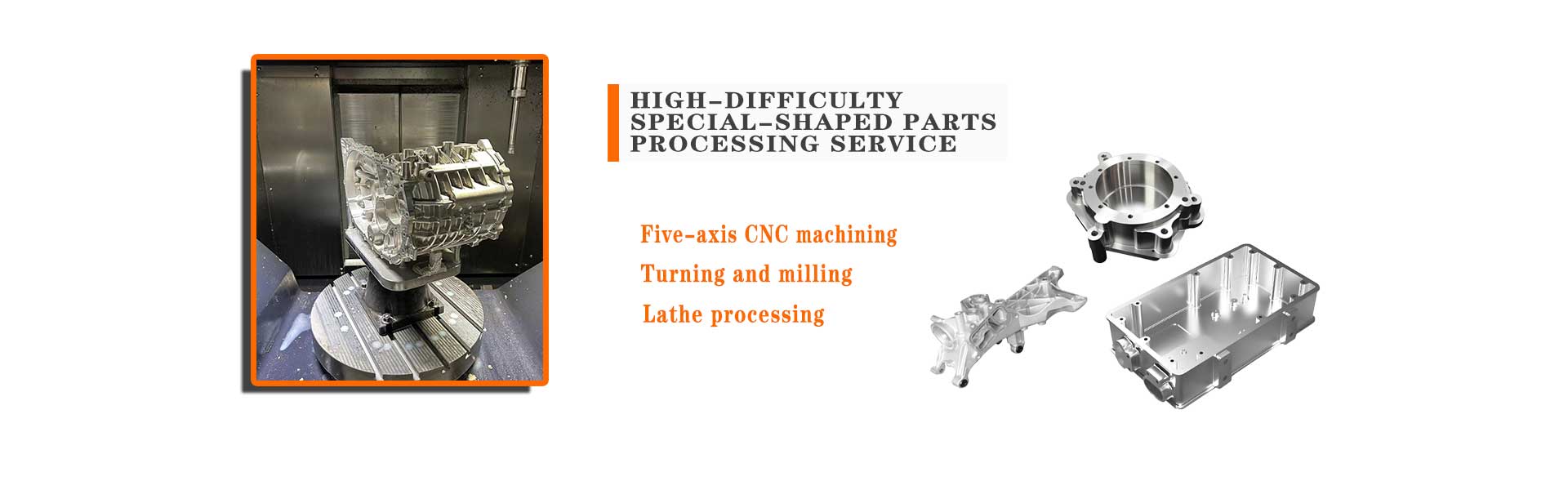
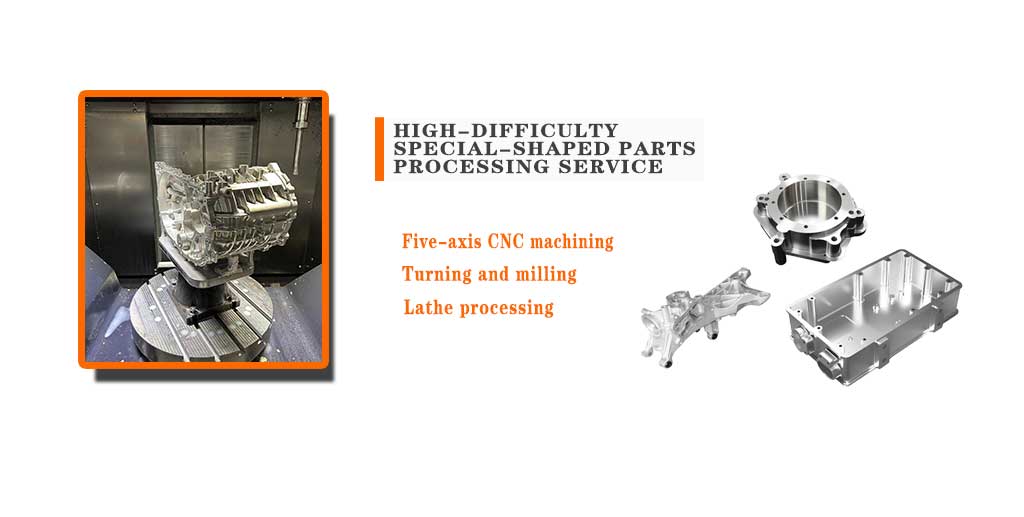
Chenju Precision specializes in precision parts processing services, offering 3-axis, 4-axis, and 5-axis CNC machining, turning and milling compound processing, CNC lathe processing, and small-batch parts processing, etc. It excels in handling complex-structured workpieces and can customize special fixtures and jigs for projects. Each product undergoes at least four full inspection procedures, with a quality pass rate of 99.93%. It provides high-quality small-batch processing customization services, with sample production within 3 days and delivery within 7 days.
If there are any subsequent projects that require CNC machining, you can send the drawings to this email address for evaluation and quotation: info1@us.cjcncmachining.com
The main application industries of five-axis CNC machining
Five-axis CNC machining of impeller parts: such as turbocharger impeller machining, secondary impeller machining, seven-stage impeller machining for turbomolecular pumps, high-pressure water pump impeller machining, air compressor impeller machining, blower impeller machining, scroll plate parts machining, blower impeller plate machining, etc.
Five-axis CNC machining of military parts: Customized CNC processing of various parts for military products. The pictures have been treated for confidentiality.
Five-axis CNC machining of aerospace parts: aircraft propeller parts, turbocharger parts, transmission housing machining, hydraulic system and component machining, electromechanical component parts, engine component machining, landing gear assemblies, unmanned aerial vehicle (UAV) parts machining, etc.
Five-axis CNC machining of medical parts: bone plate processing, custom medical bone file parts, processing of implantable medical device components, surgical robots, surgical instruments, surgical robot bodies, processing of medical device components, etc.
Five-axis CNC machining of automotive parts: such as engine blocks, reverse bowls of car lamps, gear box housings, turbocharger assemblies, automotive valves, automotive brake system components, suspension pins and arms, drive shafts, hydraulic joints and bushings, valves, pump bodies, etc.
Five-axis CNC machined robot parts: such as robot reducers, robot joints, robot arms, exoskeleton wearable robot parts customization, quadruped robot parts CNC machining, etc.
Chenju Precision specializes in precision parts processing services, offering 3-axis, 4-axis, and 5-axis CNC machining, turning and milling compound processing, CNC lathe processing, and small-batch parts processing, etc. It excels in handling complex-structured workpieces and can customize special fixtures and jigs for projects. Each product undergoes at least four full inspection procedures, with a quality pass rate of 99.93%. It provides high-quality small-batch processing customization services for customers, with sample production within 3 days and delivery within 7 days.
When machining stainless steel CNC structural parts, the following details should be noted:
Structural feasibility: When designing stainless steel structural components, the processing feasibility should be taken into account. Complex structures may lead to processing difficulties or be impossible to achieve. Therefore, structural analysis and evaluation should be conducted during the design stage to ensure the feasibility of the structure and its processing performance.
Wall thickness control: The wall thickness of stainless steel structural components needs to be reasonably controlled. Excessively thin walls may lead to processing difficulties, deformation or damage, while overly thick walls may increase processing time and costs. It is necessary to select an appropriate wall thickness based on specific circumstances and ensure stability during the processing.
Tolerance control: Precise tolerance control is crucial for the processing of stainless steel structural components. Reasonable setting of cutting parameters, selection of appropriate tools and processing paths should be carried out to ensure that the processing dimensions meet the design requirements and comply with relevant standards and tolerance requirements.
Hole depth control: When processing hole depth, it is necessary to pay attention to controlling the cutting parameters and processing strategies to avoid processing difficulties, damage or instability. Select the appropriate hole depth according to specific requirements and ensure cooling and lubrication during the cutting process.
It should be noted that stainless steel has high hardness and good wear resistance, but it also causes certain tool wear and processing difficulty. Therefore, when machining stainless steel CNC structural parts, reasonable cutting parameters, cooling and lubrication, tool selection and appropriate processing technology are very important.
Chenju Precision specializes in precision parts processing services, offering 3-axis, 4-axis, and 5-axis CNC machining, turning and milling compound processing, CNC lathe processing, and small-batch parts processing, etc. It excels in complex-structured workpieces and can customize special fixtures and jigs for projects. Each product undergoes at least four full inspection procedures, with a quality pass rate of 99.93%. It provides high-quality small-batch processing customization services for customers, with sample production within 3 days and delivery within 7 days.
If there are any subsequent projects requiring stainless steel CNC machining, please send the drawings to this email address for evaluation and quotation: info1@us.cjcncmachining.com
When machining stainless steel CNC structural parts, the following details should be noted:
Structural feasibility: When designing stainless steel structural components, the processing feasibility should be taken into account. Complex structures may lead to processing difficulties or be impossible to achieve. Therefore, structural analysis and evaluation should be conducted during the design stage to ensure the feasibility of the structure and its processing performance.
Wall thickness control: The wall thickness of stainless steel structural components needs to be reasonably controlled. Excessively thin walls may lead to processing difficulties, deformation or damage, while overly thick walls may increase processing time and costs. It is necessary to select an appropriate wall thickness based on specific circumstances and ensure stability during the processing.
Tolerance control: Precise tolerance control is crucial for the processing of stainless steel structural components. Reasonable setting of cutting parameters, selection of appropriate tools and processing paths should be carried out to ensure that the processing dimensions meet the design requirements and comply with relevant standards and tolerance requirements.
Hole depth control: When processing hole depth, it is necessary to pay attention to controlling the cutting parameters and processing strategies to avoid processing difficulties, damage or instability. Select the appropriate hole depth according to specific requirements and ensure cooling and lubrication during the cutting process.
It should be noted that stainless steel has high hardness and good wear resistance, but it also causes certain tool wear and processing difficulty. Therefore, when machining stainless steel CNC structural parts, reasonable cutting parameters, cooling and lubrication, tool selection and appropriate processing technology are very important.
Chenju Precision specializes in precision parts processing services, offering 3-axis, 4-axis, and 5-axis CNC machining, turning and milling compound processing, CNC lathe processing, and small-batch parts processing, etc. It excels in complex-structured workpieces and can customize special fixtures and jigs for projects. Each product undergoes at least four full inspection procedures, with a quality pass rate of 99.93%. It provides high-quality small-batch processing customization services for customers, with sample production within 3 days and delivery within 7 days.
If there are any subsequent projects requiring stainless steel CNC machining, please send the drawings to this email address for evaluation and quotation: info1@us.cjcncmachining.com
The quality of mechanical processing products is closely related to the dimensional accuracy, surface finish and assembly of parts. The processing technology of mechanical parts is the key to ensuring quality. The mechanical processing accuracy mainly includes dimensional accuracy, shape accuracy, surface accuracy, position accuracy and processing accuracy, etc. Then, how about the various processing dimensional accuracies of CNC machining centers that we commonly talk about? We simply list them as follows:
The surface roughness of the turning process is 1.6 to 0.8 μm.
Rough turning requires the use of large cutting depths and large feed rates without reducing the cutting speed to improve turning efficiency. The surface roughness requirement is 20-10 μm.
Semi-finishing and finishing should be carried out at high speed with small feed rates and cutting depths as much as possible. The surface roughness should be 10 to 0.16 μm.
High-precision lathes can use finely ground diamond turning tools to perform high-speed precision turning on non-ferrous metal workpieces, achieving a surface roughness of 0.04 to 0.01 microns. This type of turning is also known as mirror finishing.
Spark machine processing can achieve 0.005mm.
Grinding machine processing can achieve 0.005. Please provide the text you would like translated.
The above are the more common machining accuracy standards for mechanical processing machines. Of course, the higher the price of the mechanical equipment, the higher the accuracy will naturally be.
In addition, factors such as the process steps of CNC machining, personnel operation, the service life of CNC machine tools, and tool wear all have an impact on the quality of mechanical parts.
All of these will have an impact on the quality of mechanical parts. Chenju Precision focuses on precision parts processing services, providing 3-axis, 4-axis, 5-axis CNC machining, turning and milling compound processing, CNC lathe processing, small batch parts processing and other services. It is good at processing complex-structured workpieces and can customize special fixtures and jigs for projects. Each product undergoes at least four full inspection procedures, with a quality qualification rate of 99.93%. It provides high-quality small batch processing customization services for customers, with sample production within 3 days and delivery within 7 days.
Precautions for Five-axis CNC Aluminum Machining
1.Select a reasonable cutting volume. Staff members choose the cutting speed to be used based on the material, hardness, cutting state, type of material, and depth of cut of the aluminum shell to be processed. These conditions are essential for effectively reducing machine wear.
2. Select appropriate cutting tools. When rough turning, generally speaking, it is better to choose cutting tools with high strength and durability, so as to better meet the requirements of rough turning.
3. Select reasonable fixtures. The parts should fully meet the requirements of the machine to reduce unnecessary positioning errors. It is better to choose dedicated fixtures for clamping tools.
4. Determine a reasonable processing path. Try to shorten the processing path of the aluminum shell during CNC machining as much as possible to reduce machine wear.
Chenju Precision specializes in precision parts processing services, offering 3-axis, 4-axis, and 5-axis CNC machining, turning and milling compound processing, CNC lathe processing, and small-batch parts processing, etc. It excels in handling complex-structured workpieces and can customize special fixtures and jigs for projects. Each product undergoes at least four full inspection procedures, with a quality pass rate of 99.93%. It provides high-quality small-batch processing customization services, with sample production within 3 days and delivery within 7 days.
In recent years, the application of aluminum alloy shells has become increasingly widespread. As is well known, aluminum shells are various types of shells made of aluminum alloy. They are processed from aluminum profiles obtained by the aluminum stretching method of hardware shells and can be widely used in the electronics industry. So, what are the advantages of CNC processing of aluminum shells? Next, the editor of Chenju Precision will explain to you.
Advantages of CNC machining for aluminum shells:
1.Aluminum profile shells are easy to process, which is unmatched by other types of shells. However, the waterproof performance of aluminum profile shells is generally poor, making them unsuitable for use in the wild and harsh environments.
2. The chemical properties of aluminum shell CNC processing are stable, it is non-magnetic and recyclable. It is a benign and recyclable metal material.
3. The finished products of aluminum shell CNC processing are free of metal contamination, non-toxic, and the surface oxide layer contains no volatile metals.
4. The corrosion resistance of the aluminum shell CNC processing makes it not restricted by the office environment. It can also be used in some chemical plants. On the one hand, it can protect the internal components and provide convenience for customers.
Chenju Precision specializes in precision parts processing services, offering 3-axis, 4-axis, and 5-axis CNC machining, turning and milling compound processing, CNC lathe processing, and small-batch parts processing, etc. It excels in complex-structured workpieces and can customize special fixtures and jigs for projects. Each product undergoes at least four full inspection procedures, with a quality pass rate of 99.93%. It provides high-quality small-batch processing customization services for customers, with sample production within 3 days and delivery within 7 days.
The CNC machining process is of considerable significance in terms of quality control. During the on-site production of CNC machining, it is necessary to formulate an operation instruction manual, namely SOP, and strictly implement it to standardize the operation of the machine by employees. In workshop management, products and tools must be neatly placed within the planned area lines, maintaining a clean and dry environment. For the inspection of finished products before shipment, the most crucial aspect is the quality of personnel, their meticulousness in handling processed parts. If workers can handle each operation step with care, ensuring gentle handling, it will greatly contribute to the quality of the products.
The production process is of great significance in quality control. In the CNC machining site, during the production process, operation instruction books, namely SOPs, should be formulated and strictly implemented to standardize the operation of the machines by the employees. Each process should be assigned to a specific person. It is very important for employees to conduct self-inspection of the products. After multiple checks, the quality department will inspect and only qualified products will proceed to the next process. No substandard products should be manufactured and no defective products should flow into the production process. Each workshop should place the products awaiting inspection, qualified products and unqualified products in different areas and clearly mark them to prevent confusion.
2. When managing the workshop, products and tools must be neatly placed within the planned area lines, and kept clean and dry. Only in this way can the processed parts reach a very high standard. The dimensions should be inspected according to the drawings without any deviation, and the shape and position tolerances should be met. Only when they are "clean" and "free from scratches on the surface" can they be regarded as qualified finished products.
3. The most important aspect of the finished product's outgoing inspection is the quality of the personnel and their meticulousness in handling the processed parts. If workers can handle the parts gently during each operation, ensure no metal shavings remain on the workpieces after each process, stack the workpieces neatly in designated areas, take appropriate protective measures to prevent collisions and scratches between the workpieces, and perform thorough cleaning and packaging at the final stage to ensure the parts are clean and free of oil stains, the outgoing inspection can be carried out smoothly. Strictly follow the process regulations, and carefully conduct self-inspection, mutual inspection, and final inspection. Shenzhen Haowei Precision Machinery Co., Ltd. undertakes the processing of non-standard parts. Welcome to contact us by phone!
Regular inspection of the equipment and fixtures in CNC lathe processing and maintenance of the machine can reduce quality problems caused by potential abnormalities of the lathe itself. To ensure that CNC processed products meet high-precision requirements, reasonable planning and implementation of production management can be more effective, and it can also increase production capacity!
Chenju Precision specializes in precision parts processing services, offering 3-axis, 4-axis, and 5-axis CNC machining, turning and milling compound processing, CNC lathe processing, and small-batch parts processing, etc. It excels in handling complex-structured workpieces and can customize dedicated fixtures and jigs for projects. Each product undergoes at least four full inspection procedures, with a quality pass rate of 99.93%. It provides high-quality small-batch processing customization services to customers, with sample production within 3 days and delivery within 7 days.
Machining accuracy refers to the degree of conformity between the actual geometric parameters (size, shape and position) of a part after processing and the ideal geometric parameters. Generally, the higher the degree of conformity, the higher the machining accuracy. In actual processing, it is impossible to make the part exactly the same as the ideal one, and there will always be deviations of different magnitudes. The degree of deviation of the actual geometric parameters of the part after processing from the ideal geometric parameters is called machining error.
The factors that affect the machining accuracy and cause machining errors can be classified into three aspects:
(3) Errors during the adjustment of work, fixtures and tools.
(2) Cutting heat and other heat sources cause deformation of the process system.
(6) Measurement Error
Chenju Precision specializes in precision parts processing services, offering 3-axis, 4-axis, and 5-axis CNC machining, turning and milling compound processing, CNC lathe processing, and small-batch parts processing, etc. It excels in complex-structured workpieces and can customize special fixtures and jigs for projects. Each product undergoes at least four full inspection procedures, with a quality pass rate of 99.93%. It provides high-quality small-batch processing customization services for customers, with sample production within 3 days and delivery within 7 days.
In ChenJu Precision, our technical sales staff will response to your custom CNC machining parts within 30 minutes with 1-to-1 online service. you will get the professional advice and save you R&D time.
get an instant quote